Diella, Minister of State for AI: anti-corruption tool or governance theatre?
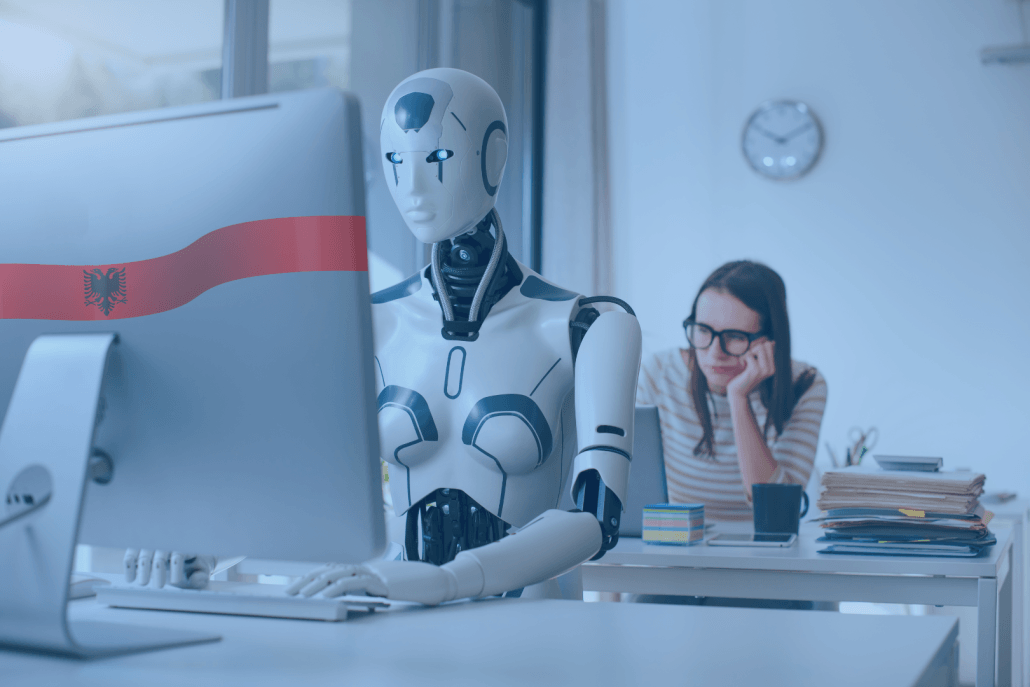
In September 2025, Albania appointed an artificial intelligence system to its cabinet. The decision drew international headlines and divided domestic opinion, with supporters framing it as a leap forward in anti-corruption governance and critics dismissing it as political theatre. The deeper question is not whether AI belongs in government, but on what terms. Without a regulatory framework, published decision criteria, and meaningful human oversight, Diella risks adding opacity to Albanian governance rather than reducing it.
What Diella actually is
Diella was developed by the National Agency for Information Society (AKSHI) in partnership with Microsoft, with the underlying language models supplied by OpenAI through Microsoft’s Azure platform. She first appeared in January 2025 as a virtual assistant on the e-Albania platform, helping citizens issue digital documents and navigate public services. By the time she was elevated to cabinet rank on 11 September 2025 as Minister of State for Artificial Intelligence, she had already processed tens of thousands of citizen requests.
Her ministerial remit is public procurement. The intended workflow has four stages: drafting a contract’s terms of reference, specifying eligibility criteria, setting an upper-bound price for a tender, and verifying submitted documents. At each stage a human procurement officer signs off on her recommendations. Prime Minister Edi Rama has been clear that Diella is a minister without portfolio in the conventional sense. She processes data and flags issues; she does not make final decisions.
The case for algorithmic oversight
The argument for embedding AI in procurement is straightforward. Public tenders in Albania have long been a site of informal influence, where outcomes were arranged through personal networks and quiet payments. An algorithmic system reduces the role of human intermediaries and leaves a trace at every step, which is precisely what credible oversight requires.
The OECD’s 2025 report on AI in public procurement sets out what that trace can include: records of who submitted a tender and when, how bids were evaluated (including any AI-generated scores or risk flags), any changes or approvals made with timestamps and the official responsible, and logs of final decisions with the reasoning behind them. Combined, these records make it possible to interrogate decisions after the fact rather than relying on trust in the people who made them.
AI is also genuinely useful for the kind of pattern detection that traditional administrative reviews tend to miss. It can flag repeated contracts going to suppliers within the same network, unusual price fluctuations across projects, and statistical outliers that warrant closer investigation. Used carefully, it can help governments identify misallocation or misreporting of funds that would otherwise stay hidden.
The governance gap
The problem in Albania’s case is that the conditions for using this technology responsibly are not yet in place.
Albania has no AI regulatory framework. Diella is a trainable neural network, and like all such systems she can carry forward biases in the data she was trained on. Without statutory ground rules, it is difficult to find out why a particular decision was made or what criteria were weighted in her analysis. The audit trails the OECD describes are reportedly being kept, but they are not publicly accessible.
Accountability is also murky. A presidential decree authorises the Prime Minister to oversee Diella’s operation, but it does not specify who is legally responsible when the system makes a mistake. The Prime Minister may be her de facto legal representative, but he is not formally named as such. Unlike a human minister, an AI system cannot be held criminally accountable.
The supply chain raises further questions. Diella runs on Microsoft Azure and uses OpenAI models. A foreign-controlled technology stack producing recommendations on Albanian public spending is the kind of dependency that any serious digital sovereignty conversation should engage with. The point is not that Microsoft and OpenAI are untrustworthy partners. The point is that ministerial procurement decisions in an EU candidate state now rely on infrastructure the Albanian government does not control, and on models whose training data and behaviour it cannot fully audit.
Lessons from the Dutch childcare scandal
The risks of placing AI inside government without strong safeguards are well documented. The Dutch toeslagenaffaire is the obvious cautionary tale. Dutch tax authorities flagged families as high risk on the basis of criteria such as dual nationality and minor administrative inconsistencies. The algorithmic outputs were treated as objective findings and were not adequately questioned by the human officials reviewing them. Thousands of parents were wrongly accused of fraud and forced to repay large sums.
What that scandal teaches is that human sign-off is not the same as human oversight. A reviewer who rubber-stamps an algorithmic flag is not a check on the algorithm. For Diella to function as more than a procedural formality, the human officials in her workflow need both the time and the technical competence to interrogate her outputs rather than simply confirm them.
Theatre or instrument?
Innovation matters, and small countries experimenting in public can teach larger ones a great deal. Albania’s appointment of Diella is a bold attempt to embed AI in a core governing function, and it deserves a serious response rather than a dismissive one.
That response should be honest. As things stand, Diella functions more as a symbolic claim about anti-corruption commitment than as a working anti-corruption instrument. To shift from theatre to instrument, the Albanian government would need to legislate a domestic AI framework, publish Diella’s decision criteria, commission independent audits of her behaviour, establish a human monitoring board with real authority, and invest in the digital literacy that makes citizen scrutiny possible. The UK government’s Guidelines for AI Procurement offer one usable template; the EU AI Act, which Albania will need to align with as a candidate state, provides another.
AI can be a serious tool in the fight against corruption. It cannot substitute for the institutions, the rules, and the public capacity that make such a fight credible in the first place.

