It’s Not About Age: What Multigenerational Teams in Malta Tell Us About Digital Work and GenAI
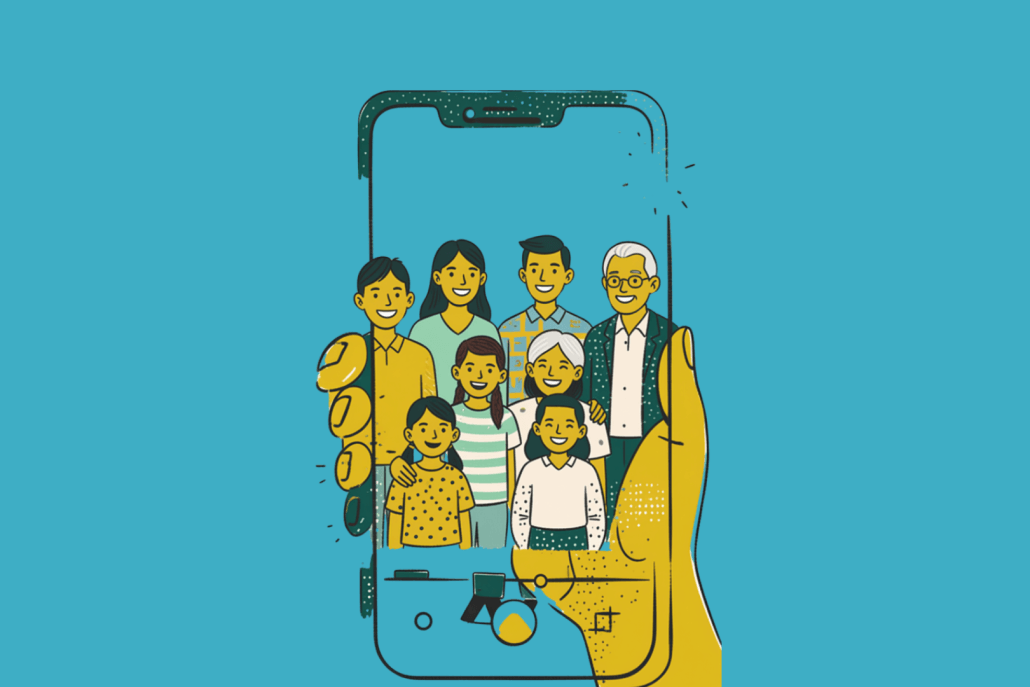
A joint study from the 3CL Foundation and the National Skills Council finds that the friction in multigenerational teams is rarely about who was born when. It is about which assumptions have been left unspoken. Read the full report here.
The standard story about generations and technology is, by now, familiar. Younger workers, raised with smartphones, glide effortlessly through new tools. Older workers, the story goes, lag behind. Add GenAI to the mix, and the gap supposedly widens. It is a tidy narrative, but it is too much of an oversimplification.
In Working Across Generations: Digital Literacy, GenAI, and Workplace Dynamics in Malta, the 3CL Foundation and the National Skills Council set out to test that story against what workers themselves report. Across eight focus groups and sixty-four participants drawn from education, social partners, employers, policy bodies, civil society, and youth organisations, the finding was consistent: friction in multigenerational teams is rarely a function of age-based ability. It is a function of unexamined norms and organisational conditions.
Malta is a useful setting for the question. As a small EU state with an SME-dominated economy, acute labour market tightness, and accelerating digitalisation, Malta functions as a natural laboratory whose patterns we expect to resonate in comparable economies facing the same convergence of GenAI adoption and age-diverse workforces. Six findings from the study illustrate what this looks like in practice, and what the report proposes organisations do in response.
1. The digital native story is the wrong starting point
Participants framed digital literacy not as tool proficiency, but as an “umbrella” of integrated capabilities: selecting the right tool for a task, prompting GenAI effectively, recognising privacy and ethical implications, and critically evaluating what comes out the other end.
The generational pattern that did emerge was less about ability and more about temperament. Younger workers tended towards experimentation, picking up tools quickly and using only the parts immediately required. That confidence cuts both ways: it produces speed, and it can produce uncritical trust in AI outputs that look plausible but are not. Older workers more often pursued comprehensive mastery, taking longer to adopt a tool but coming to know its full range once they did. Both dispositions have an obvious complement, and neither is sufficient on its own.
The proposed action. The report’s core reframe is that no generation acquires critical digital literacy automatically, including the most digitally fluent. Organisations should build capability across all cohorts, pairing the younger worker’s instinct to prospect new tools with the older worker’s instinct to consolidate them into reliable workflows. The goal is complementarity, not catch-up.
2. The most visible fault line is communication, not capability
If there is one place where multigenerational teams visibly stumble, it is communication channels. Older workers leaned towards voice and face-to-face contact; younger workers towards instant messaging, asynchronous defaults, and lower formality. The same conversation can run on email and on Teams in parallel, with neither group fully aware that the other is missing context. Tone and formality cause as much misreading as channel choice itself, with informal, emoji-laden messages from younger colleagues registering as unprofessional, and formal phrasing from older colleagues registering as cold.
The proposed action. Make communication norms explicit. The report recommends a one-page communication charter: which channel is used for what, what counts as urgent, what response time is reasonable, and what after-hours contact looks like. Critically, this works as shared norm-building rather than top-down imposition. Where organisations had done this work, participants reported fewer overlooked messages and fewer instances of friction misread as disrespect.
3. Learning preferences differ, but the stereotypes are unreliable
The expected pattern showed up in part. Some younger workers preferred flexible, asynchronous, online learning, taking it in shorter bursts and on their own schedules; some older workers preferred guided, structured, in-person formats with clearer scaffolding. The interesting finding was how often the exceptions undid the rule.
Virtual learning produced its own disengagement problems. Younger participants frequently left cameras off, and trainers described the experience of “talking to a black screen”. Several participants noted that many younger workers, in fact, dreaded virtual meetings and training, seeing them as inefficient. Younger participants noted a preference for just-in-time learning- opting to learn a new skill or tool only once required and for the purpose they required. Older workers, for their part, were often described as approaching new tools with a fear of failure that led some to give up before trying, yet led others to commit to mastering the tool in full once that initial hesitation passed. What participants returned to repeatedly was that mindset, psychological safety, and the perceived relevance of the material mattered more than the format itself.
The proposed action. Build psychologically safe learning conditions. The report suggests practical, low-cost moves: a recurring monthly “tool try-out” slot in the calendar, sandboxes where mistakes carry no consequence, and leaders who model learning out loud, including what they tried, what worked, and what did not. Reward curiosity visibly. The cost of being wrong has to be lower than the cost of not trying. Critically, learning doesn’t have to flow in one direction. Reciprocal mentoring, involving juniors sharing tools and seniors sharing experience and professional standards, converts the generational mix from a friction source into a practical asset.
4. Work as a home, work as a platform
Perhaps the most analytically distinctive finding concerns retention. Drawing on Durkheim’s distinction between mechanical and organic solidarity, the report reads two different orientations toward employment running through the focus group data.
For some workers, more typically older, the organisation is a place they belong to. Identity, status, and professional meaning are bound up with institutional membership. Their loyalty runs deep precisely because leaving carries a cost to identity, not merely income. For others, more often younger, the organisation is a platform they use. Status comes from specialisation and visibility rather than tenure. Values still matter, sometimes acutely, but the calculus is different: organisational ethics matter because association is reputationally legible, not because the institution constitutes the self.
This resolves a paradox that has confused many employers. Younger workers can appear simultaneously more values-attentive and less institutionally loyal. They are operating from a different solidarity structure.
The proposed action. Differentiate retention strategy. Honour the tenure, continuity, and institutional history that “home” seekers draw meaning from. Provide “platform” seekers with visible evidence that stated values hold up in actual decisions, particularly the commercially inconvenient ones. Treating the two groups as one retention problem, fixable with the same engagement survey or benefits package, is where organisations tend to go wrong.
5. GenAI is welcomed, feared, and ungoverned
Participants resisted both the techno-utopian and techno-pessimist framings, describing GenAI as a two-sided coin whose effects depend on supervision. They welcomed productivity gains. They also raised consistent concerns: privacy risks from uploading sensitive material into public tools, bias risks where outputs reproduce problematic assumptions, accountability ambiguity where it is unclear who owns the quality of AI-assisted work, and passive over-reliance where users skip verification because the output looks plausible.
A particularly sharp risk is what the report calls the entry-level squeeze. GenAI is rapidly automating the routine tasks that have traditionally trained new professionals. As one participant put it, if legal research is taken up by AI, there is less need for legal interns. Yet legal interns are how legal partners are eventually made.
The proposed action. Two moves in parallel. First, set light but clear GenAI guardrails before informal habits become entrenched defaults: a one-page rules-of-thumb document covering what must never be uploaded, the principle that a human remains accountable for any AI-assisted output, and agreed use cases versus no-go zones. Introduce it as norm-setting in a team meeting, not policing in a silent memo. Second, audit entry-level roles. Identify what learning experiences must remain even as tasks shift, and redesign rather than eliminate junior positions to ensure the stretch experiences that build judgement are preserved.
6. Transversal skills are the resilience anchor
In an environment where specific tools become obsolete in months, the capabilities that hold their value are the ones that travel: communication, teamwork, creativity, adaptability, problem-solving, critical thinking, empathy, and the meta-capability of “learning how to learn”. Participants consistently described these as the fulcrum of long-term resilience.
Older professionals voiced concern about an apparent erosion of these skills among younger cohorts, citing a rise in derivative, AI-mediated work that short-circuits the labour of argumentation and synthesis. Younger participants framed the same priorities from the other direction: technical skills, as one put it, are the “root” of a job, but without communication and empathy “it just doesn’t work”. Employers reported seeking transversal skills precisely because technically proficient recruits often lack the adaptability and collaborative judgement that complex work demands.
The proposed action. Invest systematically in transversal skills, and treat them as core infrastructure rather than an optional add-on. The report’s preferred mechanism is integration: embed these capabilities into everyday work design, coaching, feedback, and team processes rather than isolating them in standalone training. Make feedback developmental, comment on judgement and reasoning rather than only on output, and run short scenario discussions that exercise the capacities in question.
The window is open. It will not stay open for long.
The urgency isn’t abstract. Across the focus groups, participants described GenAI already in use with almost no organisational governance around it. Informal habits are forming now. Once they solidify into defaults, they are much harder to reshape.
None of the actions above requires a large budget. They require deliberate choice, and they require it soon. The full report sets out a tiered framework of foundation, capability-building, and strategic actions, and is available here.
This report is the first phase of a wider research project. Subsequent phases will build on these findings through organisational case studies and quantitative measurement. We welcome contact from teams interested in adapting the methodology in their own jurisdictions.

