Technology, Young People and Innovation: A Panel Discussion
Lifelong Learning in a Digital Age
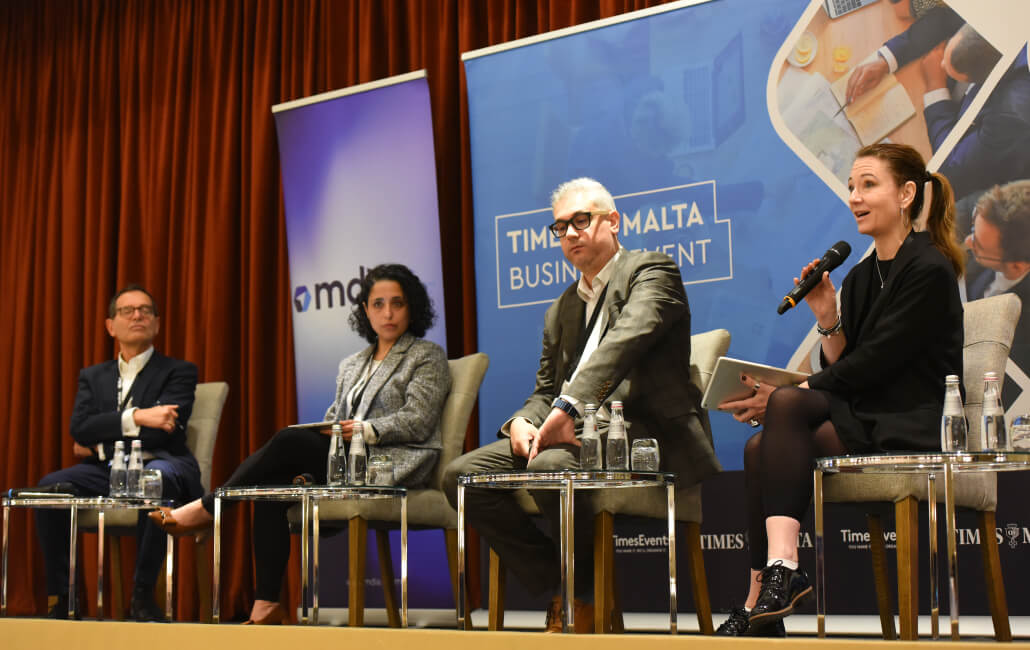
On April 17th, the 3CL Foundation kicked off the Times of Malta Business Breakfast with a deep dive into Technology, Young People and Innovation. Steering the conversation was Prof Alex Grech, 3CL Executive Director and Professor at the University of Malta. The panelists were Katarina Pietrzak, a Researcher, Strategist and Project Manager focusing on Lifelong Learning at the Research Institutes of Sweden (RISE), Neil Attard, Director at The Digital and Transversal Skills Directorate, and Dr Jean-Marie Mifsud, Chief Innovative Technology Officer at Malta Digital Innovation Authority (MDIA).
Prof. Alex Grech set the tone by questioning the newfound coolness of EdTech, drawing from his two-decade experience in the field. The panel highlighted the omnipresence of online media and mobile technology, shaping the discussion on essential tech skills for today’s youth.
The Skills Gap Issue and the Need for Lifelong Learning
Katarina Pietrzak shared her insights gleaned from collaborating with the Swedish tech industry and her trips to places such as Silicone Valley, Hong Kong and China to find how countries were doing EdTech differently. One of the research projects she had worked on was to help operators in factories adapt to the new green transition process their company was undergoing. There was a lot of tension surrounding the issue as those high up in the company believed that the operators were not interested in learning, which was not the case. It was more akin to understanding how they could learn, as lifelong learning is a muscle one needs to train. Pietrzak elaborates: “these operators were not trained to learn; they were not invited to be motivated to learn”. She emphasised the importance of acknowledging what we commonly label as ‘soft skills’, though she expressed reluctance in using this term due to its tendency to diminish the value of these crucial abilities, which encompass adaptability, problem-solving, creativity, self-motivation, communication, and teamwork. Pietrzak argues that these skills – better referred to as 21st Century Skills – are crucial, alongside technical skills. Through her research, she seeks to answer questions like “How do we learn when we work, how do we accomplish this workplace learning that we really need, because the work is changing so fast? How do we motivate the labour force to continue developing their skills?”
Dr Jean-Marie Mifsud stressed that innovators require a range of skills and traits, including critical thinking, creativity, risk-taking, an inquiring mind, the ability to notice problems and gaps, ethical awareness and an entrepreneurial mindset. Dr Mifsud underscored the dual nature of innovation, emphasising the need for user acceptance to drive meaningful impact. She championed integrating digital innovations into daily life, highlighting the necessity of lifelong learning to keep pace with technological advancements. Technology will fundamentally reshape our societies and the way things work, and citizens need to adapt to these changes.
Redesigning Learning and Critical Thinking
The conversation turned to redesigning learning experiences to foster critical thinking, with Neil Attard advocating for personalised, tech-enabled approaches. Attard highlighted that when students copied their homework answers directly from ChatGPT, it was incumbent on the educator to ask those students what prompted them to get that answer. This puts their transversal skills and critical thinking to the test as students are asked: What question or prompt elicited this answer? How did you prompt engineer ChatGPT or whatever AI platform used to get this answer?
Pietrzak stressed the need to measure learning outcomes and re-designing – in some cases overhauling – traditional education formats to accommodate adult learners effectively. It’s crucial for learning to be tangible, encompassing both formal and informal aspects. This necessitates a structured approach, particularly concerning the demands of the labour market. The current one-size-fits-all classroom model fails to foster innovation and inquiry, designed as it was for a different era. Redesigning educational formats offers opportunities for improvement. This imperative extends to courses offered on Ed Tech platforms, which often mimic traditional school systems and thus adopt a pedagogical rather than an andragogical approach to learning.
Attard shared anecdotes of using robots in classrooms to promote critical thinking from a young age. In their robotics lesson, when kids instruct robots to get from point A to point B and the robot doesn’t manage to reach its intended destination, they need to stop and think and go through the code again. Immersive learning experiences facilitated by technology like XR.
The Importance of User Motivation and Meaningfulness
The panelists emphasised the importance of making learning meaningful and catering to individual needs to promote intrinsic motivation. Katarina Pietrzak shared her experience with Trainstation, a project that provides marginalised youth with access to high-end technology training and opportunities to develop tech skills for societal change.
Katarina Pietrzak mentioned the time she was at the Apple Inc. HQ in San Francisco where EdTech was shown in the form of holograms to teach human anatomy to go into the veins and the lungs, obviously targeting biology teachers. She described it as ‘Biology meets Minecraft’. If used in schools, this could also impart a sense of meaningfulness to students. They would find it relevant and fascinating. We cannot permit TikTok to become meaningful to them whilst school is just full of boring information, half of which students feel they don’t need, argued Pietrzak.
Integrating Digital Literacy
Alex Grech asked the panelists how innovation could impact both the education sector and the labour market.
Neil Attard said that Malta was now bound by European Union targets when it comes to digital literacy: by 2030, 80% of the population needs to be digitally literate and citizens need to have basic digital skills. For this to happen, resources need to be improved and teachers need to be empowered.
As the host of the Maltese European Digital Innovation Hub (EDIH), Dr Jean-Marie Mifsud explained this was a network that was the result of an initiative taken by the European Commission. The idea behind it was that it serves as a one-stop shop to stimulate and speed up the uptake of digital transformation within the European Union. Work was underway to set up an IoT lab that included 3D printing and robotics. Then there’s also business-related assistance: Innovators might be great at the technical aspect but wouldn’t necessarily know how to take the product to market and develop a good business plan. There was also a focus on networking opportunities because it was also in the MDIA’s interest to link innovators with investors. Finally, the role of the EDIH is also to support the reskilling of the workforce.
Teacher Training and Support
The panelists acknowledged the challenges associated with integrating technology into traditional education systems. Neil Attard shared his experience with resistance from teachers to adopt new technologies and emphasised the importance of providing adequate training and support. Some teachers thought VR headsets were a waste of time and did not pertain to the syllabus.
Balancing Innovation and Tradition
Katarina Pietrzak cautioned against completely abandoning traditional pedagogical methods in favor of innovation. She advocated for finding a balance between embracing new technologies and preserving valuable aspects of traditional education. The reason why Sweden had reverted to the use of pen and paper in mainstream classrooms was the fear that students might never learn how to write properly.
Addressing the Risks of Technology
Dr Jean-Marie Mifsud highlighted MDIA’s recent information campaign to educate the public about social media risks and promote critical thinking in digital interactions. The aim was to get citizens to ask themselves questions, such as: Have you ever thought of the negative consequences of posting a picture while you are abroad? Can anyone see your pictures or are they just restricted to a limited number of people who you trust?
Conclusion
In conclusion, the panelists emphasised collaboration as key to promoting lifelong learning. They called for a paradigm shift in education to prepare individuals for the ever-evolving digital landscape, with lifelong learning serving as the cornerstone of success in the 21st Century.

