MrBeast’s AI Thumbnail Tool: A Case Study in Algorithmic Imitation and Creative Platform Economies
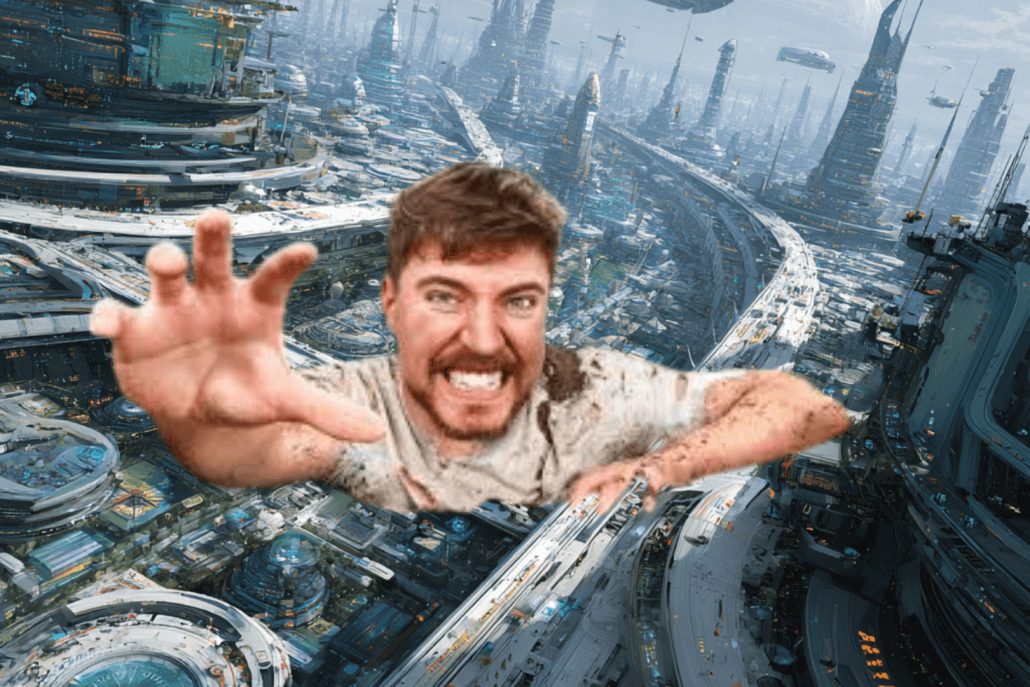
YouTube’s creator economy experienced a revealing flashpoint in the ongoing debate over artificial intelligence and art. Jimmy Donaldson, known as MrBeast, briefly launched an AI thumbnail generator which allowed users to make thumbnails in the style of their favourite youtubers through his ViewStats platform. Following widespread backlash, MrBeast opted to take down the tool in mention.
Democratising Aesthetics: Lowering Barriers, Raising Standards
Thumbnails remain among the most influential determinants of video performance on YouTube. MrBeast has publicly stated he spends tens of thousands of dollars optimising thumbnails, recognising their decisive impact on reach and engagement. The AI tool he introduced allowed users to input a YouTube channel’s name, analyse its thumbnail aesthetic, and generate similar outputs, including face-swapping and brand imitation, all for $80 a month, which is far cheaper than hiring a professional designer.
On one hand, this represents a genuine levelling of the playing field. Smaller creators, often excluded from the high-end production aesthetics that define YouTube’s top echelon, gained access to tools that could elevate their visual output. This has broader implications for the platform: better-designed thumbnails improve viewer experience, raise average content quality, and enable algorithmic discovery to function more equitably.
Yet the same features that enhance access also raise ethical and legal concerns, as ultimately this has to do with people’s work and livelihoods.
The Paradox of Mimicry
Few people got rich making Van Gogh knockoffs. Ironically, the tool failed to capture what makes MrBeast’s thumbnails effective. It reproduced surface features such as facial expressions, saturated colours, and text placement, but missed the iterative design process, embedded trust, and narrative cohesion underpinning his thumbnail’s success. This highlighted AI’s current limitation: it can imitate but cannot replicate the strategic thinking, brand evolution and reasoning that gives content cultural resonance. An individual capable of critically using AI tools, however, will be able to go beyond simply copying the style of their favourite youtubers. A critical user will create their own thumbnail style suited to their brand through creating synergy by taking a variety of stylistic elements from different creators.
Memetics
Banning the copying of a brand’s style or thumbnails proves both ethically problematic and practically unfeasible. Mimicry forms a fundamental aspect of human creativity and cultural transmission, deeply embedded in artistic practice and beyond.
Memetics is a theory which treats ideas, behaviours, and cultural practices as “memes”: units of cultural information that replicate, mutate, and evolve in a manner analogous to genes in biological evolution. Under this lens, visual styles, editing techniques, and even thumbnail aesthetics can be seen as memes: they spread because they are effective, recognisable, or resonant within a particular cultural or technological ecosystem. When a thumbnail design works, others naturally emulate it, allowing the ‘meme’ to propagate and evolve. In this sense, imitation is not theft, but a mechanism of cultural innovation that precedes AI. Innovation involves successfully copying different elements from usually various fields to create something new
Arts and Displacement
Yet, acknowledging the evolutionary nature of cultural production does not negate the importance of crediting and supporting artists and creators, especially in an era marked by the rapid rise of generative technologies. Many creatives today face precarity as their labour is increasingly devalued or displaced by automation. Respecting authorship and ensuring visibility for original creators remain critical principles. Automation and technological change, while not inherently harmful, demand careful, deliberate governance. Left unchecked, these shifts can replicate the initial harms of previous industrial transformations, displacing workers, deepening inequality, and concentrating power in the hands of a few. Just as the industrial revolution brought enormous gains at a human cost, today’s digital revolution requires robust safeguards to ensure that innovation does not come at the expense of dignity, fairness, and cultural richness.
AI is a novel tool. Up until now, tools have been totally reliant on a human user. Unlike past tools, AI introduces a new agentic dimension; it will soon be generating outputs with a degree of autonomy, it can create rather than be used to create. AI will soon be able to, for example, create its own artwork without a direct human prompt.
Skill-Biased Technological Change (SBTC)
Skill-Biased Technological Change (SBTC) offers a powerful lens through which to understand the uneven impacts of generative AI on the creator economy. Historically, technological advancements have disproportionately benefited individuals with higher levels of skill, education, or digital fluency, often leaving routine or manual workers behind. In the context of YouTube, tools like MrBeast’s AI thumbnail generator exemplify this dynamic. While they lower aesthetic entry barriers for some, they simultaneously reward those able to strategically integrate AI into a broader brand strategy, typically creators who already possess technical and narrative sophistication.
Resistance to Change
Historically, artists have resisted new developments that challenged existing norms, from early 20th-century reactions to Picasso’s cubism to scepticism surrounding digital art’s legitimacy. Such resistance reflects broader tensions around innovation and tradition. Similar to the Industrial Revolution, developments in society (art, science or otherwise) lead to the devaluing of individuals with the skillset that is going out of vogue. Nonetheless, art and humans’ role in art will not cease to exist but will invariably change. Adaptation is crucial for artists, similar to the rest of society.
Platform Reflexivity
In response to the backlash, Donaldson quickly removed the tool and redirected users to a curated list of human thumbnail artists. Whether one agrees with MrBeast’s AI thumbnail tool or not, it remains encouraging to see YouTube demonstrate a reflexive culture where creators listen to their communities and make decisions aimed at the common good without resorting to legal action. Ultimately, many of the challenges of digital governance are novel and require societal learning and cooperation in good faith. This dynamic responsiveness reflects a maturing platform economy attentive to creator concerns and ethical considerations.
Copyright, AI and Art
This situation is emblematic of a wider issue. To what extent should AI be allowed to be trained on other people’s work/art? To what extent can an individual own a style?
Currently, under EU law, there are limited protections for artists and their work in this regard. Copyright law protects “original works of authorship.” While a painting reflects numerous creative decisions and artistic expression, a typical YouTube thumbnail is more like a basic advertisement, functional rather than expressive. Courts generally find that purely functional designs with minimal creativity fall below the “originality threshold” required for copyright protection, especially given that thumbnails tend to incorporate stock images, etc. Under the EU Copyright Directive (2019/790), AI can train on copyrighted material unless rights-holders explicitly opt out. Previously, copying an artist’s style, whilst not popular, was entirely legal and in fact, artists like Picasso started whole subgenres of art through their style. However, previously it would have taken significant training to accomplish such a feat; now that AI makes this easy to do, should we rethink how we think about IP?
Legal scholars increasingly argue that copyright law alone cannot handle such disputes. For example, tools that replicate a creator’s distinctive style, though not technically infringing, may raise issues under competition law or consumer protection. The Unfair Commercial Practices Directive (2005/29/EC) could apply if consumers face misleading information or if creators’ brand equity suffers parasitic exploitation.
AI Act
The forthcoming EU AI Act seeks to address this regulatory gap by mandating comprehensive transparency obligations for generative AI systems. Under Article 52, providers of generative AI must ensure their systems inform users that content has been artificially generated. More significantly, Article 52(1)(c) requires providers to document and publicly share a sufficiently detailed summary of the use of training data protected under copyright law.
This transparency requirement marks a significant shift in AI governance. Unlike the Copyright Directive, which focuses on the legality of using copyrighted data for training, the AI Act imposes a disclosure duty regardless of legal status. For tools like ViewStats, this could entail revealing that datasets included YouTube thumbnails and describing the types of content or platforms used, though it does not go so far as to require identifying specific creators or stylistic influences.
Conclusion
The brief rise and withdrawal of MrBeast’s AI thumbnail generator reveals the growing tension between technological innovation and creative labour in the platform economy. While generative AI can lower aesthetic barriers, it also risks eroding individual authorship and commodifying personal style. Emerging regulation, such as the EU AI Act, introduces important transparency obligations but does not resolve deeper questions around ownership, attribution, and cultural value. As AI becomes more embedded in creative processes, the challenge lies in ensuring it complements rather than replaces human distinctiveness through law, design, and shared norms that prioritise fairness and creative integrity.

